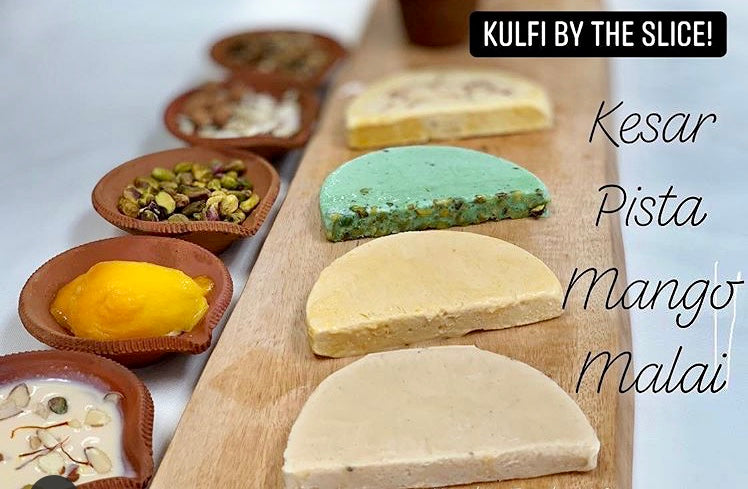
Kwality's kulfi selection — mango and beyond
In most of the world, vanilla is king. In India, it's mango. Not just among ice cream flavors — mango is arguably the single most beloved food in all of India, and when summer arrives and the Alphonso mangoes hit the markets, the entire country seems to pause and take notice.
At Kwality Ice Cream, our Mango Kulfi ($5.99) is one of our most requested items every single summer. But what makes mango so special in the Indian context, and why does mango ice cream (or mango kulfi) hit different compared to mango anything else?
"A mango a day keeps the doctor away — but only if it's a really good mango."
— A sentiment every Indian household knows by heartIndia's Obsession with Mango
India produces roughly 40% of the world's mangoes — over 20 million tonnes a year. There are over 1,500 varieties grown across the country, each with distinct characteristics. The Alphonso from Ratnagiri, Maharashtra is considered the king of mangoes globally for its rich, creamy, complex sweetness with zero fiber. The Langda from Varanasi is prized for its firm flesh and sweet-tart balance. The Dasheri from Uttar Pradesh is intensely aromatic.
Indians don't just eat mangoes — they await them. The mango season (roughly April through July) is a genuine cultural event. Families buy crates of Alphonso mangoes. Friends text each other "mangoes have arrived." And ice cream shops across the country roll out their mango specials.
�🥭 Indian Mango Season Timeline
Early varieties April
Alphonso peak May
Langda, Dasheri June
Late varieties July
Mango Ice Cream vs. Mango Kulfi — What's the Difference?
This is important. Mango ice cream and mango kulfi are not the same thing, though both are beloved in India.
Mango ice cream is made using the regular ice cream method — milk or cream is churned while freezing, incorporating air and creating a lighter, fluffier texture. Mango flavor comes from mango pulp or puree mixed into the base.
Mango kulfi is different. It's more like Indian frozen dairy — milk is slowly reduced (cooked down) until it becomes very thick and creamy, then sweetened and flavored with mango. There's no churning, so the texture is dense, rich, and almost fudge-like. The milk reduction (called rabri in its intermediate form) gives kulfi its distinctive slightly caramelized, cooked-milk flavor that ice cream simply can't replicate.
At Kwality, our Mango Kulfi uses a slow-cooked milk base reduced to the perfect consistency, then blended with real mango pulp. The result is something that tastes like the most intensely flavorful mango and the most intensely creamy dairy dessert you've ever had, simultaneously.
Why Mango Kulfi Hits Different
There's a reason mango and kulfi are such a natural pairing. Mangoes are already creamy and rich in their own right — Alphonso mangoes in particular have an almost custard-like texture when fully ripe. Combined with the dense, caramelized-milk richness of kulfi, the flavors amplify each other.
It's also a nostalgia thing. For most Indians who grew up in India, the sound of the kulfi-wala's cart bell, the delivery of Alphonso mangoes from family in the know, the ritual of scraping the last bits of kulfi from the cone — these are deeply embedded memories. Mango kulfi is summer, childhood, celebration, and joy all in one frozen bite.
How to Enjoy Mango Kulfi at Kwality
Our Mango Kulfi ($5.99) is available at both Kwality locations in Dublin and San Jose. Eat it as is, or try it as part of our Falooda Kulfi ($9.99) — where the mango kulfi is layered with rose syrup, falooda noodles, and sabja seeds. Two of India's greatest desserts in one glass.
The mango season is short. Kwality's mango kulfi is available while supplies last. Come visit us this summer and taste why, for millions of Indians, mango isn't just a fruit — it's a way of life. �🥭